Command a Watcher
You are a fallen Watcher, cast down from the heavens. Draw three, keep one as your ally, and take the Soul Coins and unique ability it carries.

Crowdfunding
The campaign page is almost ready. Until the final URL goes live, join the newsletter and we will send the launch link the moment Daemonia opens for backing.

How to play

You are a fallen Watcher, cast down from the heavens. Draw three, keep one as your ally, and take the Soul Coins and unique ability it carries.
Explore five Hellscapes and face their creatures. Subdue the fallen into your ranks, or harvest their essence to grow stronger.
Complete Contracts, win the Council's Demands across three Ages and outdo your rival aspirants.
When the final Age ends, the aspirant with the most Favour is crowned winner of Daemonia, and ascends the throne of the underworld.
What you get
One complete box, everything 2–4 aspirants need to battle for the underworld.

Choose your
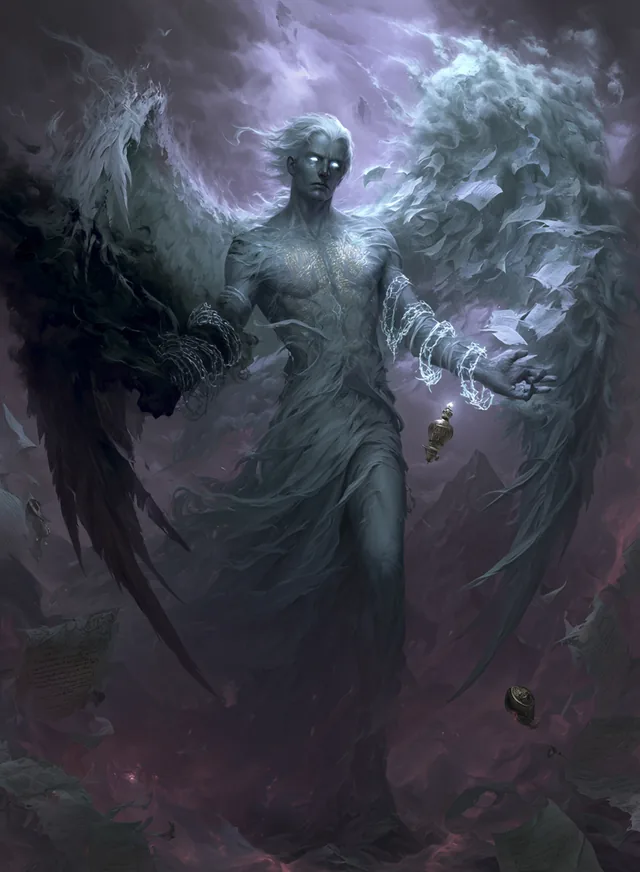
Once a Seraph, the radiant font of Solomon’s wisdom, he stood upon Mount Hermon and turned his light to shadow. From that high place he led the Watchers into transgression, binding angels and men alike to the weight of sin.
“And Semjâzâ, who was their leader, said unto them: "I fear ye will not indeed agree to do this deed, and I alone shall have to pay the penalty of a great sin."
1 Enoch 6:3-5
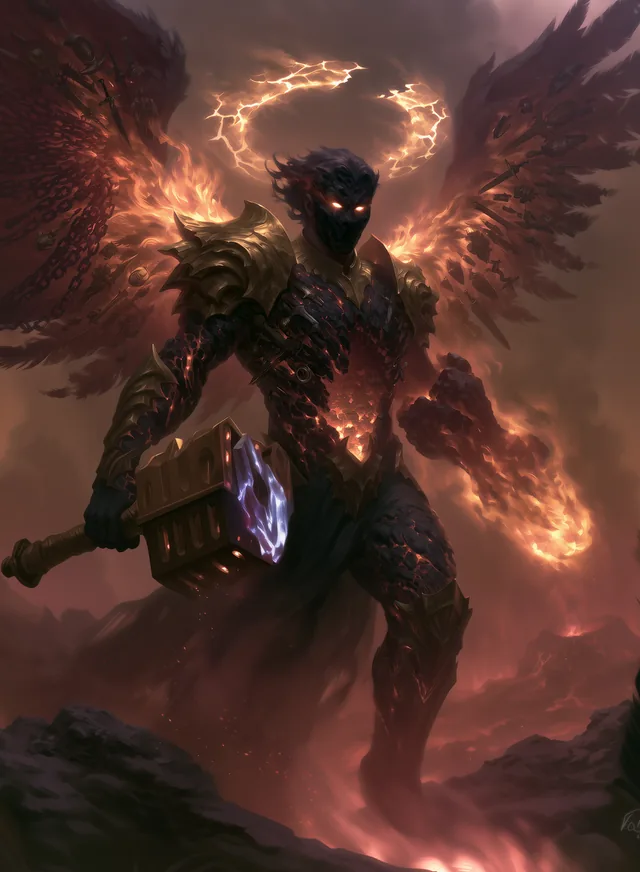
Azazel, foremost of the rebellious Watchers, betrayed Heaven by sowing forbidden knowledge among men.
It was he who forged the art of war, arming mortals with steel and blood, and by his hand the host of angels was led into sin and shadow.
Subdue creatures in
Summon
Worship
Bind an Archon to your cause and claim the blessing of its sin, a standing bonus that deepens as your devotion grows.
FEATURED
An Italian visionary, writer, and philosopher, Dante crafted the Divine Comedy, a timeless epic mapping the soul’s passage through Hell, Purgatory, and Paradise. Originally Comedìa, it was crowned Divina by Giovanni Boccaccio, securing its place among the greatest literary works of the Middle Ages and the heart of Italian culture.
Renowned Roman poet of the Augustan age, Virgil penned the Eclogues, Georgics, and the epic Aeneid, works that laid the cornerstone of Western literature and thought. In Dante’s Divine Comedy, he emerges as the wise and steadfast guide, leading the poet through the dark labyrinth of Hell and the trials of Purgatory.
Peerless among mortals, Daedalus was a master craftsman and visionary whose creations blurred the line between art and divinity. He forged the lifelike wooden cow for Queen Pasiphaë, constructed the Labyrinth to imprison the Minotaur, and crafted wings of wax and feather to defy the tyranny of Crete and soar into legend.
Charon is the ferryman of the Greek underworld. He carries the souls of those who have been given funeral rites across the Styx, which separates the worlds of the living and the dead.
Equip
Dante Alighieri’s 14th-century masterpiece, the Divina Commedia follows the soul’s journey through the three realms of the afterlife, Inferno, Purgatorio, and Paradiso. Guided first by the poet Virgil and then by Beatrice, it became the cornerstone of Italian literature and gave the Western imagination its enduring vision of Hell.
The Aegis is a powerful shield from Greek mythology, often associated with the goddess Athena. It is typically described as a goatskin shield adorned with the Gorgon's head, which has the power to turn anyone who gazes upon it into stone. The Aegis is a symbol of protection and divine authority, often depicted in art and literature as a formidable defensive weapon.
Lightning plays a role in many mythologies, often as the weapon of a sky god and weather god. As such, it is an unsurpassed method of dramatic instantaneous retributive destruction. In Greek mythology, the thunderbolt is a weapon wielded by Zeus.

Click the card to turn it over